Short answer: for brands with dozens to thousands of locations, Yext is the most established listing and knowledge platform. Uberall and Birdeye are strong alternatives with better review and engagement tools. Mid-size groups often get better value from Synup or BrightLocal. SEO Runway fits groups that want per-location geo-grid tracking, citation audits and review monitoring in one project, but it doesn't sync Google Business Profiles yet. For single-location tools, see our local SEO tools guide.
Disclosure: SEO Runway is our product. We ranked it using the same criteria as every other tool, and noted where others do better.
Quick picks
- Most established listing platform: Yext
- Best for location marketing: Uberall
- Best reviews and messaging: Birdeye
- Best value mid-size: Synup
- Best local SEO depth: BrightLocal
Multi-location SEO software compared
| Tool | Max locations | Listing sync | Reviews | Location roles | Roll-up reports | Price |
|---|---|---|---|---|---|---|
| Yext | Thousands | Publisher network | Yes | Yes | Yes | Sales-led* |
| Uberall | Thousands | Yes | Yes | Yes | Yes | Sales-led* |
| Birdeye | Thousands | Yes | Strong | Yes | Yes | Sales-led* |
| Synup | Hundreds+ | Yes | Yes | Yes | Yes | See site* |
| BrightLocal | Hundreds | Citation builder | Yes | Partial | Yes | ~$39+* |
| SEO Runway | Per project | No (no GBP sync yet) | Monitoring + requests | Team roles | Per-project reports | From $19 |
| Moz Local | Hundreds | Yes | Monitoring | Partial | Yes | Per location* |
| Semrush Local | Many | Yes | Yes | Partial | Yes | Per location* |
| Rio SEO | Thousands | Yes | Yes | Yes | Yes | Sales-led* |
| SOCi | Thousands | Yes | Yes | Yes | Yes | Sales-led* |
*Approximate or quote-based; verify.
How we chose these tools
We compared each tool's published features, plans and documentation on five multi-location criteria: location scale, listing sync, review management, location-level roles, and roll-up reporting.
1. Yext: most established listing platform
Verdict: a large publisher network and knowledge graph for brand-wide consistency.
Pros: scale; governance.
Cons: price; listings may revert if you cancel.
2. Uberall: best for location marketing
Verdict: listings, reviews and local pages for multi-location brands.
Pros: breadth.
Cons: enterprise pricing.
3. Birdeye: best reviews and messaging
Verdict: review generation, messaging and listings across locations.
Pros: customer experience tools.
Cons: lighter SEO analysis.
4. Synup: best value mid-size
Verdict: listings, reviews and grid tracking at a mid-market price.
Pros: value.
Cons: less enterprise governance.
5. BrightLocal: best local SEO depth
Verdict: rank, citation and review tools that scale to many locations.
Pros: SEO depth.
Cons: less brand governance.
6. SEO Runway: best per-location grids in one project
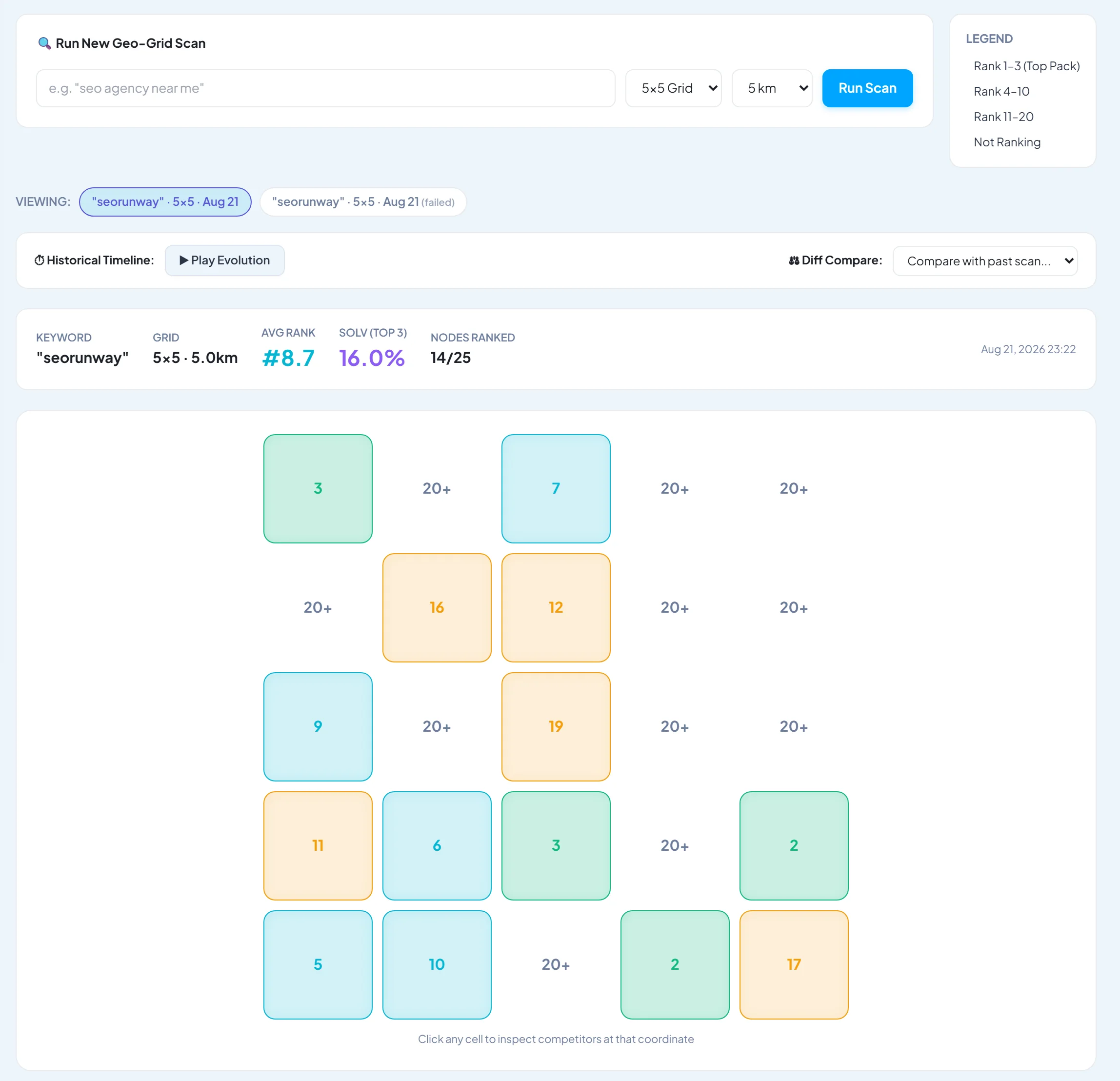
Verdict: geo-grid tracking with Share of Local Voice, citation audits, review monitoring (sentiment, response rate, request links and QR codes) and local schema, next to organic SEO and Ads.
Pricing: Local SEO from $19/month; 14-day free trial. See plans.
Pros: SEO depth per location; review-request QR codes for stores.
Cons: no Google Business Profile sync or bulk listing management yet; not built for thousands of locations.
7. Moz Local: best simple per-location sync
Verdict: straightforward listing distribution per location.
Pros: simple pricing.
Cons: limited governance.
8. Semrush Local: best for Semrush brands
Verdict: listings, map tracking and reviews in Semrush.
Pros: integrated.
Cons: per-location cost.
9. Rio SEO: best for enterprise local pages
Verdict: local landing pages and listings for large brands.
Pros: local pages.
Cons: enterprise focus.
10. SOCi: best for localised social
Verdict: local social, reviews and listings per location.
Pros: local social.
Cons: price.
Centralised vs local control
- Head office controls: brand name, categories, NAP format, logos, core services and schema.
- Locations control: hours updates, photos, local posts and review replies (with templates).
- Shared: local page content, managed as a template with local details.
Use roles so locations can act quickly without changing brand-critical data.
Related guides
Frequently asked questions
How do franchises manage local SEO?
Usually with a central platform for listings and reviews, brand templates for local pages, and location-level roles so each franchisee can post and reply within guidelines.
Is Yext worth it?
For large brands that need broad listing distribution and governance, often yes. Smaller groups usually get better value from mid-market tools. Check what happens to listings if you cancel.
Can I track local rankings for every location?
Yes. Use geo-grid tracking per location for the map pack and city-level organic tracking for each location page.
The bottom line
- Large brands: Yext, Uberall or Birdeye.
- Mid-size groups: Synup or BrightLocal.
- Groups wanting per-location SEO depth in one project: SEO Runway.
Start a 14-day free trial of SEO Runway, or see the local SEO workspace.