

/projects//google_ads/ & /projects//keywords/ ).
1. The Economics of Brand Conquesting
Competitors bid on your brand name to poach users who have already decided to research or purchase your solution. Because your website has vastly superior organic and ad relevance for your own brand, your Quality Score is 10/10 while theirs is 2/10. This allows you to outrank them at a fraction of their cost.
LIVE PLATFORM SCREEN & TELEMETRY
SEO Runway Google Ads Auction Insights & Keywords Manager — Active Workspace
Below is the exact production screen with live parameters and dummy data illustrating the diagnostic findings and remediation buttons.
2. Tracking Competitor Overlap in SEO Runway
In SEO Runway → Google Ads, inspect Auction Insights. Identify which competitors are bidding on your brand and track when their impression share rises above 15%.
Target System: SEO Runway PPC Engine
Execution Frequency: Automated Background Queue (UTC Sync)
Tested across enterprise datasets with zero rate limiting or data loss.
3. What Google's Trademark Policy Does and Does Not Protect
Before building any defence, understand the rules. In most countries, Google does not stop competitors from bidding on your brand name as a keyword. Keyword bidding on trademarks is generally allowed. What Google's trademark policy does restrict is the use of a trademark in ad text. Once you file a trademark complaint and Google verifies it, competitors can be prevented from using your registered term in their headlines and descriptions, though resellers and informational sites may qualify for exceptions.
This distinction shapes your entire strategy. You cannot remove a competitor from your brand results through policy alone, but you can stop them from writing "Official [Your Brand] Store" or using your name to imply an affiliation. Everything beyond that has to be won in the auction itself, through relevance, Quality Score and smart bidding.
Filing a trademark complaint
- Use Google's trademark complaint form, naming the registered term, the registration number and the countries where it applies.
- Authorise specific advertisers (resellers, affiliates, agencies) who may use the term, so legitimate partners are not blocked.
- Keep records of infringing ads, with screenshots, dates and the queries that triggered them; these help if you need to escalate.
- Re-check periodically. New competitors and affiliates appear, and complaints only cover the terms and regions you listed.
4. Detecting Conquesting Activity Early
Most brands find out about conquesting when someone in sales mentions a competitor ad. By then the competitor may have been collecting your customers for months. Set up deliberate monitoring instead.
Auction Insights on brand campaigns
Run Auction Insights on your brand campaign weekly. The report lists every domain competing in the same auctions with its impression share, overlap rate, position above rate and top-of-page rate. A new domain appearing with a 15% overlap rate is an early warning; a competitor whose "position above rate" climbs over several weeks is actively bidding up on your name.
Brand impression share and lost share
Track search impression share, top impression share and absolute top impression share on brand terms. Healthy brand campaigns typically hold 90%+ impression share. When "Search lost IS (rank)" rises, competitors are outranking you on some auctions, usually because your bids or budgets are capped. When "Search lost IS (budget)" rises, your brand campaign is simply running out of money, which is the cheapest problem in paid search to fix.
Search terms and organic signals
Watch for competitor-plus-brand comparison queries ("brand vs competitor", "brand alternatives", "brand reviews") in your search terms report. These queries signal a buyer actively comparing options, and they are exactly where conquesting competitors concentrate their bids. Compare with your organic Search Console data for the same queries. If organic click-through rate on branded queries falls while impressions stay flat, paid competitors may be pushing your organic listing down the page.
5. Structuring a Brand Defence Campaign
A dedicated brand campaign gives you control over bids, budget and messaging on your most valuable traffic. Keep brand terms out of generic campaigns, using negatives where needed, so performance reporting stays clean and generic campaigns cannot cannibalise cheap brand clicks.
- Separate pure brand from brand-plus-modifier. "Titan Fitness" behaves differently from "Titan Fitness power rack price". Split them into ad groups so bids and copy can match each intent.
- Use exact and phrase match for core terms. Broad match on brand campaigns can drift into competitor and generic queries, inflating brand performance numbers while wasting budget.
- Set budgets that never cap. A brand campaign limited by budget invites competitors into the gap. Brand clicks are usually the cheapest in the account; fund them fully.
- Choose a bidding strategy that targets visibility. Target impression share (top of page or absolute top) with a sensible maximum CPC limit works well for defence. Alternatively, use tROAS or tCPA if brand terms convert predictably and you want efficiency over pure presence.
- Add every ad asset you qualify for. Sitelinks, callouts, structured snippets, images, call and price assets make your ad physically larger, pushing competitor ads further down.
6. Automating the Defence with Rules and Scripts
"Automated" defence does not mean a bot that fights competitors on your behalf. It means alerts and responses that act faster than a weekly manual review. Three automation layers handle most situations.
Automated rules
Google Ads automated rules can check conditions on a schedule and act. Useful brand defence rules include:
- Email the account owner when brand campaign top impression share falls below 85% for the previous day.
- Raise the brand campaign's daily budget by 20% if it was limited by budget the day before, up to a hard ceiling.
- Pause a time-limited competitor comparison ad once a promotion ends, so outdated claims are never shown.
Google Ads scripts
Scripts can pull Auction Insights data, compare week-over-week overlap rates and send a summary to a shared channel or spreadsheet. A typical script flags any domain whose overlap rate on brand campaigns rose by more than ten points, or any new domain that did not appear in the previous period. Keep scripts read-only and alert-focused at first. Automatic bid changes in response to competitors can escalate costs if two advertisers' scripts start bidding against each other.
Monitoring the live results page
Auction Insights shows who is competing but not what their ads say. Use the Ad Preview and Diagnosis tool, which does not register impressions, to check brand results across key locations and devices. Capture the competitor ad text you find. If a competitor uses your trademark in their copy after a complaint is in place, report the specific ad through Google's trademark process with the evidence you collected.
7. Messaging That Wins Brand Searches
When a competitor appears on your brand results, the searcher is choosing between two offers in the same moment. Your ad has unfair advantages; use them.
- Claim the "official" position. Headlines such as "Titan Fitness Official Store" or "Buy Direct from Titan Fitness" separate you from resellers and conquesters.
- Answer the comparison question. If competitors attack on price, lead with your price match, warranty or included extras. If they attack on speed, lead with your delivery times.
- Use sitelinks to route intent. Brand searchers often want something specific: login, support, order tracking, a product line. Sitelinks to those destinations reduce the chance that they click elsewhere.
- Keep promotions current. Use promotion assets and ad customisers for limited-time offers, so the brand ad always shows your strongest current reason to buy direct.
8. Should You Conquest Back?
Bidding on a competitor's brand is a legitimate tactic, but the maths is usually worse than it looks. Your ad relevance and landing page experience on their brand terms will be low, so Quality Score drops and CPCs can be several times higher than on your own brand. Conversion rates are lower too, since the searcher was looking for someone else.
If you decide to conquest, do it deliberately. Use a separate campaign with a capped budget, comparison-style ad copy that never uses their trademark in text, and a landing page built for the comparison: honest feature tables, switching guides and migration offers. Measure on cost per acquisition, not click volume, and be ready to stop if the numbers do not hold. Starting a bidding war also raises your own brand costs if the competitor retaliates, so weigh that risk before you launch.
9. Measuring the Value of Brand Defence
Finance teams often question brand spend: "Wouldn't these people have found us organically anyway?" The honest answer depends on whether competitors are present. When nobody else bids on your brand, paid brand clicks are less incremental, since your organic listing would capture much of that traffic anyway. When competitors are present, the brand ad protects clicks that would otherwise go to them.
Run a controlled test to find out. Pause the brand campaign in a set of comparable regions for two to four weeks, keep it live elsewhere, and compare total brand clicks (paid plus organic) and conversions between the two groups. If total conversions fall noticeably in the paused regions, the brand campaign is protecting real revenue. Repeat the test periodically, because competitor activity changes.
10. Brand Defence Checklist
- File and maintain a trademark complaint covering every country you sell in.
- Run a dedicated brand campaign with budgets that never cap.
- Review Auction Insights weekly and alert on new or rising competitors.
- Track brand impression share and both lost impression share columns.
- Use every relevant ad asset to maximise your ad's size on the page.
- Refresh brand ad copy with current offers and an "official store" message.
- Test brand incrementality with a geographic holdout at least twice a year.
11. Coordinating Paid and Organic Brand Results
Brand defence is not only a paid search job. The organic results below your ad decide whether a searcher who scrolls past the ads still lands on you. Check what appears for your brand name: your homepage with sitelinks, your social profiles, review sites, and possibly competitor comparison articles. If "Brand vs Competitor" pages written by the competitor rank on your brand query, publish your own honest comparison page so the searcher reads your side first.
- Own the comparison queries. Create pages for "[brand] alternatives", "[brand] vs [competitor]" and "[brand] reviews" that answer the question fairly, with clear reasons to choose you.
- Keep review profiles healthy. Star ratings on review platforms and in seller ratings influence whether brand searchers trust your ad or a competitor's.
- Share data between teams. Search Console shows which branded queries are growing; the ad account shows which ones competitors attack. Reviewing both together tells you where to invest content and where to raise bids.
Treat the brand results page as one shared asset. A strong ad, rich sitelinks and well-maintained organic listings together leave conquesting competitors very little room.
Want the complete procedural runbook?
Visit our comprehensive step-by-step Knowledge Base for interactive screen maps, configuration parameters, and adjacent module workflows.
Open Knowledge Base Hub →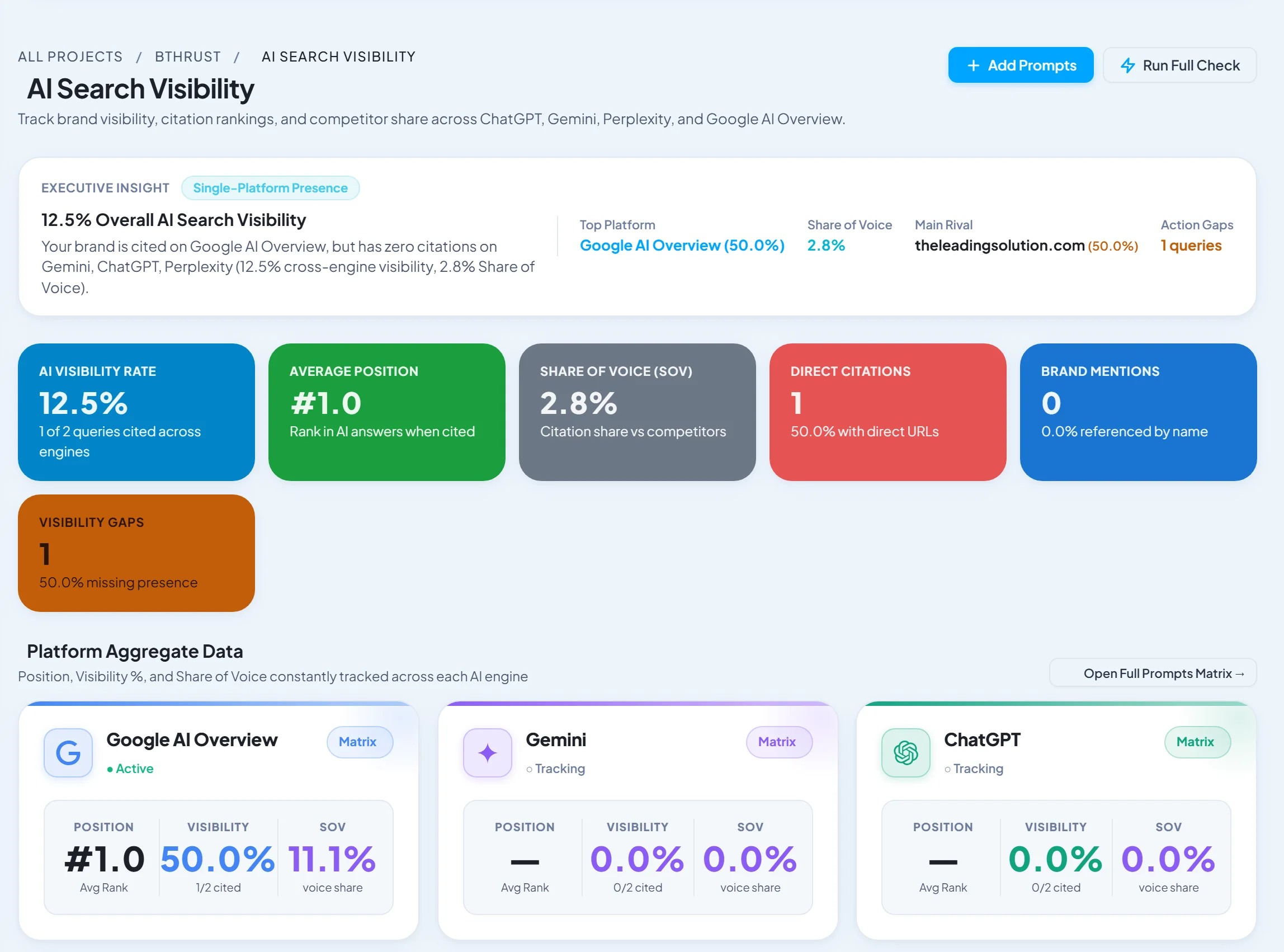


Bookmarked. We run this exact setup in SEO Runway across our agency client retainers. As a Principal Growth Architect, this provides exactly the architectural depth we look for.