

/projects//google_ads/ ).
1. From SKAGs to STAGs: The Algorithmic Shift
Google's transition to close-variant matching rendered exact-match SKAGs obsolete. Bidding models now prioritize consolidated conversion signals. Single-Theme Ad Groups provide the perfect compromise: tight messaging alignment without fragmenting account data.
LIVE PLATFORM SCREEN & TELEMETRY
SEO Runway Google Ads Campaign Architecture Studio — Active Workspace
Below is the exact production screen with live parameters and dummy data illustrating the diagnostic findings and remediation buttons.
2. Structuring STAGs with SEO Runway
Use SEO Runway's keyword clustering engine to group related search terms into cohesive STAG themes before generating responsive search ads.
Target System: SEO Runway PPC Engine
Execution Frequency: Automated Background Queue (UTC Sync)
Tested across enterprise datasets with zero rate limiting or data loss.
3. From SKAGs to STAGs
For years, many PPC specialists used single keyword ad groups (SKAGs): one exact match keyword per ad group, so every ad matched its keyword perfectly. Changes to match types made SKAGs less practical. Exact match now includes close variants with the same meaning, and broad and phrase match have expanded considerably, so a single keyword per ad group no longer controls which searches it receives. Thousands of tiny ad groups also starve Smart Bidding and responsive search ads of data.
Single theme ad groups (STAGs) are the modern alternative. Each ad group contains a small set of closely related keywords that share one intent, and its ads and landing page speak directly to that intent. STAGs keep relevance high while giving Google enough data per ad group to optimise.
4. What Counts as One Theme
A theme is a single customer need that one ad and one landing page can answer well. For a plumbing company:
- Emergency plumber: "emergency plumber", "24 hour plumber", "plumber near me now", "urgent plumber".
- Boiler repair: "boiler repair", "boiler not working", "boiler engineer", "fix boiler".
- Bathroom installation: "bathroom fitters", "bathroom installation", "new bathroom fitted".
Each group would need different headlines, offers and landing pages, so each is its own STAG. Keywords that would happily share the same ad and page belong together; keywords needing a different message belong apart.
5. Building a STAG Structure Step by Step
- Collect keywords from keyword research, search term reports and competitor analysis.
- Cluster by intent: group keywords that share the same need and would be answered by the same landing page. SERP similarity, meaning whether Google shows similar results for two keywords, is a useful clustering signal.
- Name each ad group by its theme, so reports are easy to read.
- Limit each ad group to roughly 5–20 closely related keywords. Very large ad groups usually mean several themes have been mixed.
- Write one or two RSAs per ad group with headlines tailored to the theme.
- Map each ad group to its best landing page, creating dedicated pages for high-value themes where none exist.
- Add negatives to route traffic, so queries land in the right ad group, for example adding "emergency" as a negative to the routine boiler repair group.
6. Match Types Within STAGs
STAGs work with any match type strategy, but the combination matters:
- Broad match with Smart Bidding is Google's recommended approach for many accounts. In a STAG, broad match keywords give the system the theme, and Smart Bidding uses signals to find relevant queries. Strong negative lists and regular search term reviews are essential.
- Phrase and exact match give more control, which suits accounts with tight budgets, low conversion volume or strict relevance requirements.
- Mixed approaches are common: exact and phrase match for core high-value terms, with broad match tested in a separate campaign or ad group to discover new queries.
Whatever the mix, check that the same keyword isn't duplicated across ad groups with conflicting match types. Duplicates make it unpredictable which ad group serves a search.
7. Campaign Structure Around STAGs
STAGs sit inside campaigns, which should be split by things that need separate budgets, bidding or targeting: brand versus non-brand, service lines with different economics, locations with different budgets, and high-intent versus research queries. Avoid splitting campaigns so finely that each has too few conversions for Smart Bidding to learn. A common structure is a handful of campaigns, each with several STAGs, rather than dozens of campaigns with one ad group each.
8. Measuring Whether the Structure Works
- Search term relevance: the share of search terms in each ad group that match its theme. Low relevance means themes are too broad or negatives are missing.
- Quality score components: expected click-through rate, ad relevance and landing page experience by ad group.
- Conversion rate and cost per conversion by ad group, compared with the old structure.
- Impression share for high-value themes, to make sure budgets cover them.
9. Restructuring an Existing Account
Rebuilding a live account carries risk, because new ad groups and keywords lose some performance history. Reduce it:
- Audit first: list current ad groups, their keywords, search terms and performance. Identify mixed-theme ad groups with poor relevance.
- Restructure in phases: start with one campaign or service line, measure for four weeks, then continue.
- Keep winning elements: carry over high-performing headlines and descriptions into the new ad groups.
- Use experiments where possible, comparing the new structure against the old with split traffic.
- Avoid changing everything at once: don't switch bid strategy, match types and structure in the same week, or you won't know what caused any change.
- Pause old ad groups only once new ones are live and serving.
10. Common Mistakes
- Recreating SKAGs under a new name, with one keyword per ad group and too little data.
- Themes that are really several needs mixed together.
- One generic RSA reused across every ad group.
- Every ad group pointing to the homepage instead of a matching landing page.
- No negative keywords routing traffic between related ad groups.
- Duplicate keywords across ad groups and campaigns.
- Restructuring the whole account in one go.
11. A Worked Example
An accountancy firm's single "Accountants" ad group contained 140 keywords, including "small business accountant", "tax return help", "bookkeeping services", "limited company accountant", "self assessment" and "VAT returns". One RSA spoke generically about "expert accountants", and every click went to the homepage. Search terms showed searchers looking for a dozen different services, and conversion rate varied widely between them.
The restructure created seven STAGs: self assessment tax returns, limited company accounts, bookkeeping, VAT returns, payroll, small business accountants and accountants for landlords. Each had 6–15 keywords, two RSAs with service-specific headlines ("Self Assessment from £150", "Filed Before the Deadline"), and a dedicated landing page with prices and a booking form. Negatives routed queries correctly, for example "VAT" as a negative in the bookkeeping group. After two months, ad relevance and landing page experience improved across the board, conversion rate rose on most themes, and the firm could finally see which services its ads were selling profitably.
12. STAG Checklist
- Keywords clustered by shared intent and landing page.
- Each ad group named for its theme, with roughly 5–20 keywords.
- One or two theme-specific RSAs per ad group.
- A matching landing page for each theme.
- Negatives routing traffic between related ad groups.
- No duplicate keywords across ad groups.
- Campaigns split by budget, bidding and targeting needs, not by every theme.
- Search term relevance and quality score monitored per ad group.
13. Using Search Term Data to Refine Themes
Themes shouldn't be set once and left. Every month, review each ad group's search terms and look for two signals. If a large share of terms belong to a different intent, the theme is too broad, or a negative is missing, and a new ad group or a routing negative is needed. If new converting queries keep appearing that the ad group doesn't explicitly target, add them as keywords so they get dedicated ad copy, or split them into a new theme if they need a different message. Over time, this feedback loop keeps the structure aligned with how customers actually search, which matters more as broad match and AI-driven matching widen the range of queries each keyword can trigger.
14. How STAGs Support Smart Bidding and Automation
Automation works best with clear signals and enough data. STAGs provide both: each ad group tells the system exactly what the theme is, while grouping related keywords gives it enough volume to learn. Clean themes also make Google's recommendations and AI-generated assets more relevant, since the system understands what each ad group is about. Well-structured accounts tend to get more value from automation, not less.
A STAG structure isn't about following a template. It is about making sure every search meets an ad and a page written for exactly that need. When a structure makes your reports readable, your ads specific and your landing pages relevant, it is working, whatever the number of keywords per ad group turns out to be.
15. STAGs for Small Budgets
Small accounts benefit from STAGs too, but with fewer themes. If your budget is £1,000 a month, ten tightly themed ad groups competing for spend will each gather too little data. Start with your three to five most valuable themes, the services or products that bring in the most profit, and give each its own ad group, RSAs and landing page. Leave lower-value themes out until results justify more budget. A small, focused structure built around what actually makes money will usually outperform a sprawling one that spreads a modest budget too thinly across every possible keyword.
As the account grows, add themes one at a time, starting with the search terms that already convert inside broader ad groups. They are the clearest evidence of where a dedicated theme will pay off.
16. Reporting by Theme
One underrated benefit of STAGs is clearer reporting. When each ad group represents one customer need, performance reports read like a list of services or products: how much each theme costs, how many conversions it brings and at what cost per acquisition. That makes budget conversations with stakeholders far easier. Instead of debating keywords, you can discuss whether to invest more in "boiler repair" or "bathroom installation", using numbers that map directly onto the business. Add theme-level results to your monthly report, highlight the themes gaining or losing efficiency, and use them to decide where new landing pages, offers or budget will have the most impact.
Want the complete procedural runbook?
Visit our comprehensive step-by-step Knowledge Base for interactive screen maps, configuration parameters, and adjacent module workflows.
Open Knowledge Base Hub →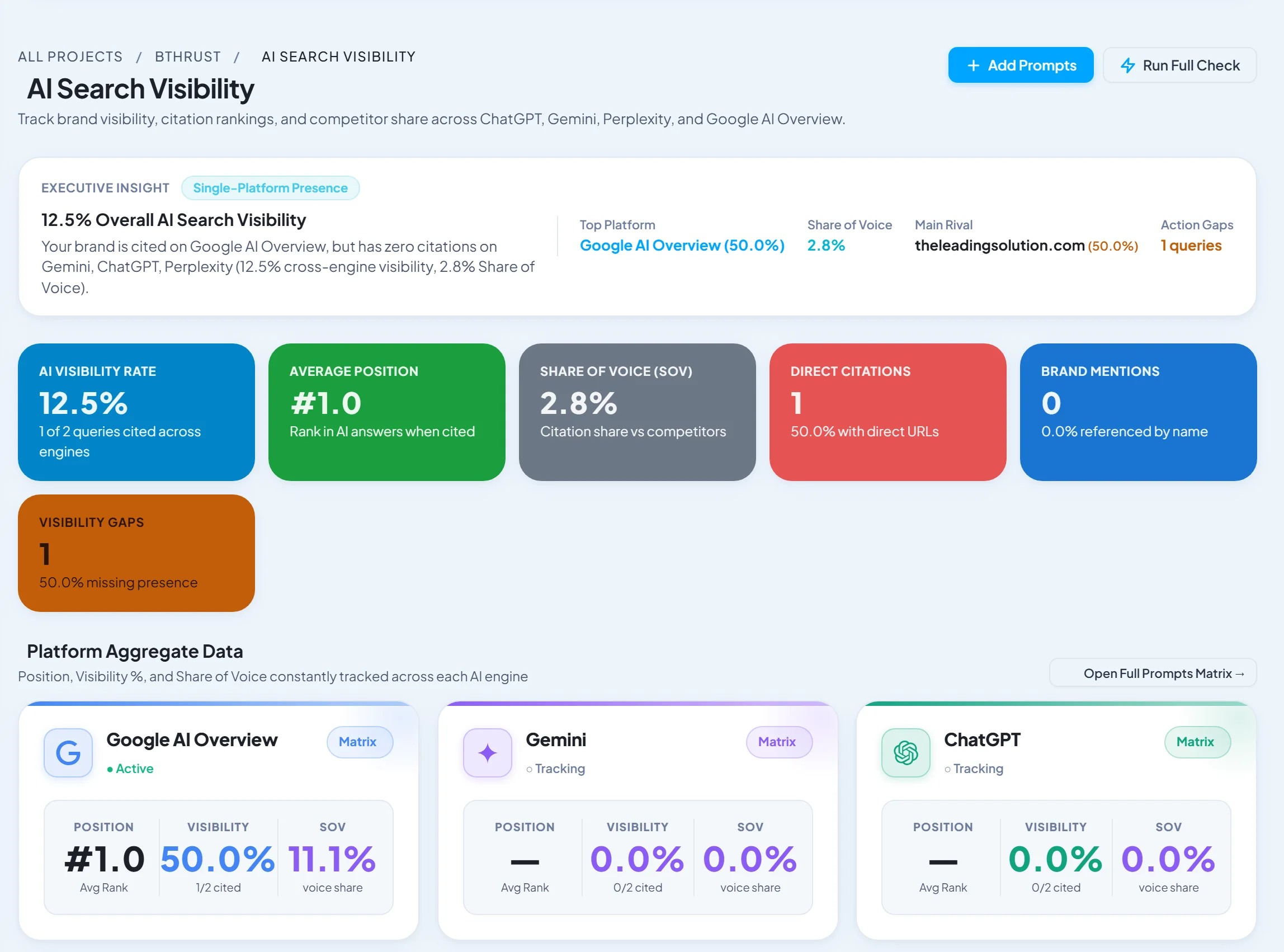


Incredible breakdown. We implemented this exact workflow last week and already saw a noticeable shift in our telemetry. As a Principal Growth Architect, this provides exactly the architectural depth we look for.