

/projects//content/ ).
1. How Algorithmic Classifiers Assess Subject Expertise
Modern search algorithms assign domain-level authority scores based on topical completeness. If your website covers technical SEO, but has zero content on log file analysis, Core Web Vitals, or hreflang, Google's topical classifiers deem your site incomplete compared to industry encyclopedias.
LIVE PLATFORM SCREEN & TELEMETRY
SEO Runway Content Studio Pillar-Cluster Builder — Active Workspace
Below is the exact production screen with live parameters and dummy data illustrating the diagnostic findings and remediation buttons.
2. Executing Pillar-Cluster Architecture in SEO Runway
In SEO Runway → Content Studio, select 'New Pillar Strategy'. Define your master topic. The AI engine maps out 12 to 20 sub-cluster briefs, complete with target keywords, internal linking hierarchies, and recommended heading structures.
Target System: SEO Runway GEO Engine
Execution Frequency: Automated Background Queue (UTC Sync)
Tested across enterprise datasets with zero rate limiting or data loss.
3. What a Topical Authority Map Is
A topical authority map is a structured plan of every subject your site needs to cover to be a comprehensive, trusted source in its niche, and how those subjects connect. It typically has three layers: core topics (the main themes you want to be known for), subtopics (the specific questions, problems and comparisons within each theme), and the relationships between them, expressed through internal links and hub pages.
Sites with deep, well-organised coverage of a subject tend to be more resilient during algorithm updates than sites that rank through a handful of isolated pages. Google's core updates repeatedly reward content that demonstrates expertise and serves users' full range of needs on a topic. A site that covers a subject thoroughly, accurately and helpfully is less exposed to any single change in how individual pages are evaluated.
4. Why Isolated Pages Are Fragile
- One page, one keyword: sites built by targeting individual high-volume keywords often have pages that rank on narrow signals, which can shift dramatically in an update.
- Shallow coverage: a single guide on a broad topic without supporting pages suggests less expertise than a full cluster covering beginner questions, advanced techniques, comparisons and troubleshooting.
- Weak internal context: pages that aren't linked to related content get less internal authority and are harder for search engines to place within a subject.
- Off-topic sprawl: sites that publish on many unrelated topics to chase traffic dilute their perceived expertise in any one of them.
5. Building the Map Step by Step
- Define your core topics from your business: the products, services and problems you want to be the go-to source for. Three to eight core topics is typical.
- Collect subtopics for each from keyword research, "People also ask", forum questions, sales and support conversations, and competitor coverage.
- Group by intent: definitions and basics, how-to and processes, comparisons and choices, costs and pricing, problems and troubleshooting, advanced techniques, and industry or location variants.
- Assign one page per distinct intent, merging near-duplicate keywords into the same page to avoid cannibalisation.
- Choose a hub page for each core topic that introduces it and links to every subtopic page.
- Audit existing content against the map: mark what exists, what is thin, what is missing and what overlaps.
- Prioritise gaps by business value, search demand and how close you are to ranking.
6. Linking the Map Together
A map only creates authority if the site's structure reflects it:
- Hub to spoke: each hub links to all its subtopic pages with descriptive anchors.
- Spoke to hub: each subtopic page links back to its hub near the top or in the introduction.
- Spoke to spoke: related subtopic pages link to each other where it helps the reader, for example from "how to choose" to "cost comparison".
- Across clusters: link between core topics where they genuinely overlap, but avoid linking everything to everything.
- Navigation and breadcrumbs that mirror the hub structure.
Internal linking is also what helps AI and search systems understand that your site covers a subject comprehensively, rather than having a few unrelated pages that happen to mention it.
7. Quality Matters More Than Coverage
A topical map can be misused as a licence to publish hundreds of thin pages. That approach is exactly what Google's helpful content and spam systems target. Each page in the map should earn its place:
- It answers a distinct need that the hub or other pages don't already answer.
- It shows first-hand experience or expertise: examples, data, screenshots, case studies or practitioner insight.
- It is accurate, current and better than what already ranks.
- It has a named author with relevant credentials.
Fewer, stronger pages almost always beat many weak ones. If a subtopic can't be covered well, leave it out or fold it into a broader page.
8. Using the Map to Weather Updates
When a core update lands, a topical map gives you a structured way to diagnose impact. Compare performance by cluster rather than by page: did a whole topic lose visibility, or just a few pages within it? A cluster-wide drop suggests a quality or expertise issue across that subject; isolated drops point to page-specific problems such as outdated content or a better competitor page. Because the map shows how pages relate, you can strengthen a weakened cluster deliberately, updating the hub, improving the weakest spokes and filling gaps, rather than reacting page by page.
9. A Worked Example
A home insulation company wants authority on "loft insulation". Its map might look like this:
- Hub: "Loft insulation: the complete guide" covering what it is, benefits, types, costs and the installation process, linking to every spoke.
- Basics: "How much loft insulation do I need?", "What is the recommended insulation thickness?"
- Choices: "Mineral wool vs sheep's wool vs rigid boards", "Best loft insulation for older homes"
- Costs: "Loft insulation cost by house size", "Grants and schemes for loft insulation"
- Process: "Can I install loft insulation myself?", "What happens on installation day?"
- Problems: "Condensation after loft insulation", "Signs your insulation needs replacing"
- Local variants: service pages for each area covered, with local pricing and project examples.
Each page answers one distinct question with real examples from the company's projects, and the whole cluster links together. Compared with a single "loft insulation" service page, the cluster demonstrates far deeper expertise, and an update that rewards helpful, experience-based content is likely to favour it.
10. Maintaining the Map
- Quarterly gap review: check for new questions in Search Console queries, forums and sales calls, and add them to the map.
- Content decay checks: identify pages losing clicks and refresh them before they fall out of results.
- Cannibalisation checks: make sure new pages don't overlap existing ones; merge where they do.
- Pruning: retire or consolidate pages that no longer serve a distinct need.
- Freshness: keep facts, prices, regulations and examples current, especially on hubs.
11. Topical Authority and AI Search
AI answer engines draw on the same qualities. When a site covers a subject comprehensively and clearly, its pages are more likely to be retrieved for the many related questions users ask, and its brand becomes associated with the topic across many answers. A single excellent page might be cited for one prompt; a complete cluster can be cited across dozens of follow-up questions in a conversation. Topical maps therefore support AI visibility as well as classic rankings, especially when each page opens with a direct answer and states its key facts clearly.
12. Common Mistakes
- Mapping keywords, not intents, which produces near-duplicate pages that cannibalise each other.
- Publishing thin pages to "complete" the map.
- Building hubs without linking spokes back, leaving clusters disconnected.
- Expanding into unrelated topics to chase traffic.
- Never updating the map or the content after publication.
- Measuring page by page only, missing cluster-level trends.
13. Topical Authority Checklist
- Three to eight core topics tied to the business.
- Subtopics gathered from research, customer questions and competitors.
- One page per distinct intent, with overlaps merged.
- A hub page per core topic linking to every spoke, and spokes linking back.
- Every page showing real expertise, examples and a named author.
- Performance tracked by cluster as well as by page.
- Quarterly gap, decay and cannibalisation reviews.
14. Prioritising What to Build First
A full map can contain hundreds of planned pages, more than any team can produce quickly. Prioritise in this order. First, fix and strengthen hubs for your most commercially important topics, since they anchor everything else. Second, fill gaps for high-intent subtopics, such as costs, comparisons and "best for" questions, where users are close to buying. Third, upgrade existing pages ranking in positions 5–20, where improvements produce the fastest gains. Fourth, add supporting informational content that answers common questions and feeds internal links to commercial pages. Finally, expand into advanced and niche subtopics that build depth once the core is solid.
Tracking cluster-level visibility monthly shows when a topic has become strong enough that new pages start ranking quickly, a practical sign that topical authority is building. When that happens in one cluster, apply the same approach to the next.
15. Measuring Topical Authority
There is no single "authority score" from Google, so measure the effects. Useful signals are the share of a cluster's target keywords ranking in the top ten, total cluster impressions and clicks in Search Console, how quickly new pages in the cluster are indexed and begin ranking, featured snippet and AI Overview citations within the cluster, and stability of cluster traffic across core updates. A cluster that keeps growing through several updates is the clearest evidence that the map is working.
16. Getting Started This Quarter
Choose the one core topic that matters most to revenue. Spend a day mapping its subtopics from Search Console queries, customer questions and the pages that rank for your target terms. Audit what you already have against that map, mark gaps and overlaps, and pick the five most valuable gaps to fill this quarter, alongside refreshing the hub page. Link everything properly as you go. One well-built cluster teaches you the process, shows measurable results within a few months, and becomes the template for every other topic on the map.
Topical authority isn't a trick that protects you from every update. It is the accumulated result of covering a subject better than anyone else, which is exactly what search engines and AI systems keep trying to reward, however their algorithms change.
Review the map with subject-matter experts from sales and delivery each quarter. They spot missing questions and outdated advice faster than any keyword tool.
Want the complete procedural runbook?
Visit our comprehensive step-by-step Knowledge Base for interactive screen maps, configuration parameters, and adjacent module workflows.
Open Knowledge Base Hub →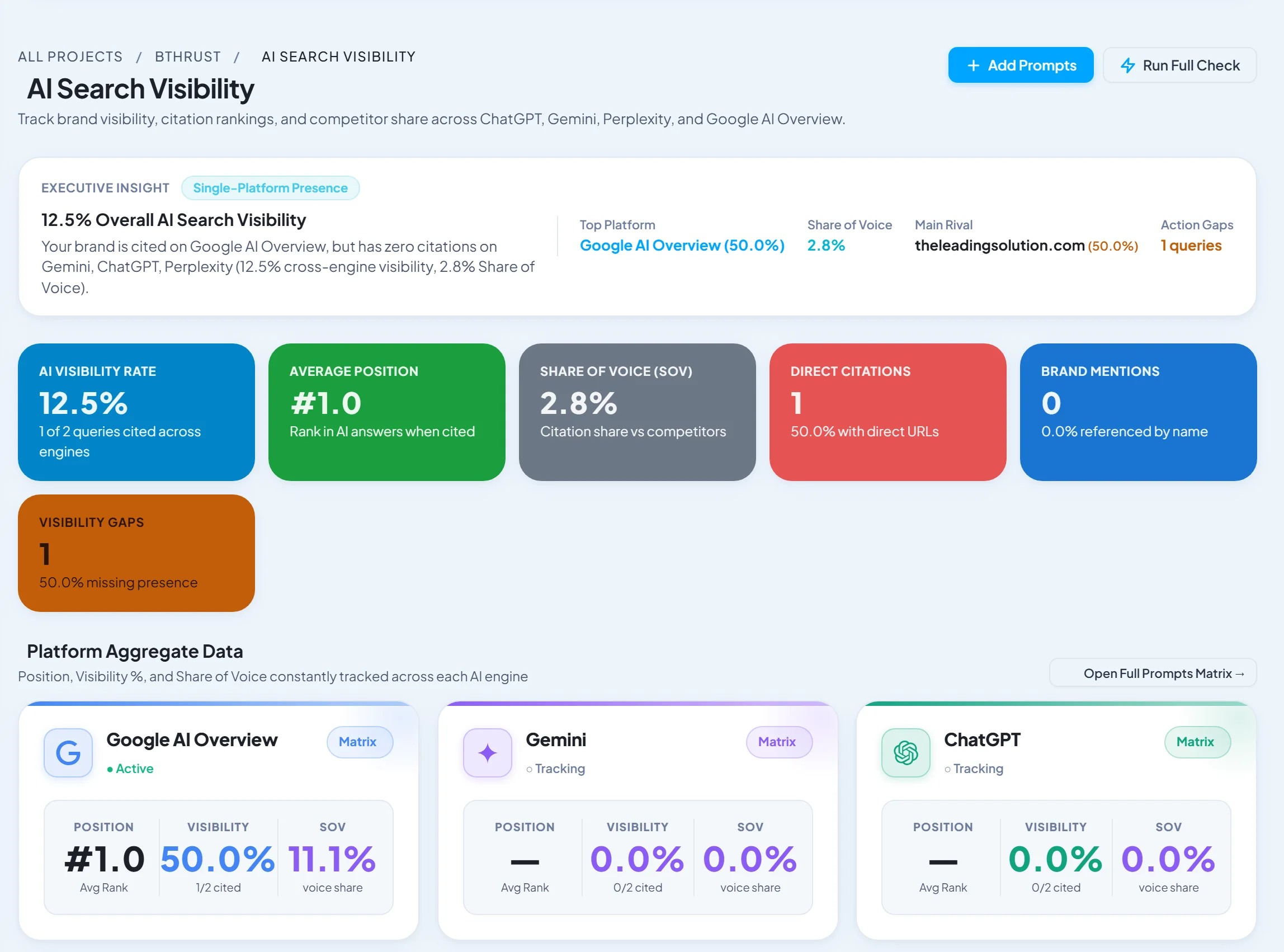


This is one of the clearest architectural explanations of this topic on the web. Sharing this directly with our senior delivery team. As a VP Marketing, CloudScale, this provides exactly the architectural depth we look for.