

/projects//activity/ ).
1. The Three Red Flags of Imminent Cancellation
Red Flag 1: Portal Silence (client has not opened a monthly report in 45 days). Red Flag 2: Approval Delays (deliverable sign-offs that used to take 2 hours now sit unreviewed for 2 weeks). Red Flag 3: Sponsor Departure (the VP who hired your agency leaves the company).
LIVE PLATFORM SCREEN & TELEMETRY
SEO Runway Activity Audit Log & User Access Analytics — Active Workspace
Below is the exact production screen with live parameters and dummy data illustrating the diagnostic findings and remediation buttons.
2. Monitoring Engagement in SEO Runway
In SEO Runway → Activity Log, filter by user role: Client Viewer. Track when key stakeholders last reviewed reports and schedule proactive strategic check-ins if activity declines.
Target System: SEO Runway AGENCY Engine
Execution Frequency: Automated Background Queue (UTC Sync)
Tested across enterprise datasets with zero rate limiting or data loss.
3. Why Churn Is Predictable
Clients rarely cancel out of nowhere. In most cases, the signs appear weeks or months before the cancellation email: slower replies, skipped meetings, fewer questions, budget conversations and quiet frustration with results. Agencies that watch for these signals can intervene while there is still time to fix the problem. Agencies that do not often hear about dissatisfaction for the first time in the cancellation notice.
A churn early-warning system combines engagement data, performance data and relationship signals into a simple health score for every client, reviewed regularly, with clear actions when a client's score falls.
4. Engagement Signals
How the client interacts with the agency is often the earliest warning sign.
- Response time: a client who used to reply within hours now takes days.
- Meeting attendance: cancelled or rescheduled calls, shorter meetings or a senior stakeholder no longer attending.
- Report engagement: reports and dashboards no longer opened or viewed.
- Approvals: deliverables waiting longer for approval, suggesting the client is less involved.
- Questions and ideas: clients who stop asking questions or suggesting ideas may have mentally moved on.
- Portal logins: declining logins to the client dashboard.
Track these over time rather than reacting to a single slow week. A sustained change over four to six weeks is meaningful.
5. Performance Signals
Results matter, but perception of results matters more.
- Declining headline metrics: several months of falling leads, traffic or revenue, especially without a clear explanation and recovery plan.
- Missed targets: goals agreed at the start not being met by expected milestones.
- Stalled progress: rankings and traffic flat for months while the client expected growth.
- Competitor gains: the client noticing competitors overtaking them in search or social.
- Tracking problems: broken analytics that make results look worse than they are.
Performance problems are not automatically churn risks if they are explained clearly and paired with a credible plan. The risk comes when results decline and the client does not understand why.
6. Relationship and Business Signals
- Champion changes: the person who hired the agency leaves, or a new marketing leader arrives. New leaders often review suppliers.
- Budget pressure: comments about cost, requests for discounts or questions about "what we get for the money".
- Internal hiring: the client hiring an in-house SEO or marketing specialist.
- Company changes: mergers, restructuring, funding difficulties or strategy shifts.
- Tone changes: more formal or critical communication, or complaints about small issues.
- Requests for data exports or account ownership, which can signal preparation for a transition.
7. Building a Simple Client Health Score
A health score turns scattered signals into something the team can review quickly. Keep it simple enough to update monthly.
- Choose five to eight signals across engagement, performance and relationship, such as response time, meeting attendance, report opens, progress against goals, champion stability and budget comments.
- Score each signal as green (healthy), amber (some concern) or red (serious concern), using clear definitions.
- Combine into an overall rating: for example, any two reds or four ambers make the client "at risk".
- Add the account manager's judgement: a short note on how the relationship feels, which often captures what data misses.
- Review monthly in a team meeting, focusing on clients that changed rating.
Some signals can be collected automatically, such as report opens, portal logins and task approval times. Others, such as tone and champion changes, come from account managers.
8. Acting on Warning Signs
A health score is only useful if it triggers action. Define a playbook for at-risk clients.
- Schedule a strategic call: a senior team member speaks with the client about goals, satisfaction and concerns, separate from routine updates.
- Listen first: ask open questions such as "How do you feel the partnership is going?" and "What would make the biggest difference for you?"
- Address performance honestly: explain what happened, why, and the specific plan to improve.
- Refresh the strategy: propose new priorities aligned with current business goals.
- Increase visibility: more frequent updates, clearer reporting and a dedicated senior contact for a period.
- Re-onboard new stakeholders: if a new decision-maker has arrived, meet them, present results and invite their priorities.
9. Proactive Retention Habits
The best churn prevention happens long before warning signs appear.
- Set clear expectations during the sale and onboarding about timelines and realistic results.
- Report outcomes in business terms, linking work to leads and revenue.
- Hold quarterly business reviews focused on strategy, not just activity.
- Build multiple relationships: connect with several people at the client, so the relationship survives if one contact leaves.
- Bring ideas: proactively suggest new opportunities rather than only executing the plan.
- Celebrate wins: make successes visible to the client's leadership.
- Ask for feedback regularly, through short surveys or conversations.
10. Measuring Churn and Retention
- Monthly churn rate: clients lost divided by clients at the start of the month.
- Revenue churn: monthly recurring revenue lost, which matters more than client count if large clients leave.
- Net revenue retention: revenue from existing clients this year compared with last year, including upgrades and downgrades.
- Average client lifetime: how long clients stay on average.
- Saved clients: at-risk clients who stayed after intervention.
- Reasons for churn: recorded from exit conversations, grouped into themes.
11. Learning from Clients Who Leave
Every cancellation is an opportunity to learn.
- Hold an exit conversation: ask politely why the client is leaving and what could have been done differently.
- Record the reasons in a consistent format: results, budget, communication, internal changes, competitor offer or other.
- Look back at the signals: which warning signs appeared, when, and whether the team noticed them.
- Update the health score and playbook based on what you learn.
- Leave on good terms: a smooth handover and a positive final experience can lead to referrals or the client returning later.
12. Common Mistakes
- Relying only on performance data, missing engagement and relationship signals.
- Waiting for the client to raise concerns instead of asking.
- Defensive responses to criticism, which deepen frustration.
- Single-threaded relationships that collapse when one contact leaves.
- Discounting immediately to save a client, without addressing the real problem.
- No follow-through after a save conversation, so the same issues return.
13. A Worked Example
An agency introduced a monthly health score after losing two large clients in one quarter. Two months later, a long-standing e-commerce client moved to amber: report opens had stopped, the marketing director had skipped two calls and organic revenue had been flat for three months. The agency's director requested a strategic call, where the client revealed a new chief executive was questioning all marketing spend. The agency prepared a short presentation for the new CEO, connecting its work to revenue and showing a revised plan focused on the highest-margin product categories. The client renewed for another year, and the agency added the CEO to quarterly reviews.
14. Timing: Why 60 Days Matters
Most retainers have notice periods of 30 days or more, and many clients decide to leave well before giving notice. Spotting risk 60 days or more in advance gives time to hold strategic conversations, adjust the plan and show early improvements before the client's decision is final. Review health scores monthly and act within a week of a client turning amber or red.
15. Automating Signal Collection
Manual health scores are easy to neglect. Automate the signals you can.
- Email and report tracking: record when reports are opened and dashboard links clicked.
- Portal activity: track client logins and pages viewed.
- Task system data: measure approval times and overdue client tasks.
- Calendar data: note cancelled or rescheduled client meetings.
- Performance alerts: flag clients whose headline metrics have declined for several consecutive months.
- Billing data: late payments or disputed invoices.
Combine automated signals in a dashboard, and ask account managers to add qualitative notes monthly. The combination of data and human judgement produces the most reliable early warnings.
16. Involving the Whole Team
Account managers see the most signals, but specialists often notice problems first: a client who stops responding to content drafts, a marketing manager who seems stressed on calls, or a website change made without telling the agency. Encourage everyone working on an account to flag concerns, through a simple channel or a field in the task system. Discuss at-risk clients openly in team meetings, without blame, so the whole team understands which relationships need extra care and why.
17. When Saving a Client Is the Wrong Goal
Not every at-risk client should be saved at any cost. If a client is consistently unprofitable, demands work far outside scope or treats the team poorly, a respectful exit may be better for the agency. Use the health review to decide deliberately which relationships to invest in, and handle planned exits with the same professionalism as any other, including a clean handover of accounts and data.
18. Churn Early-Warning Checklist
- Track engagement signals: response time, meetings, report opens, approvals and logins.
- Track performance against goals and explain declines with a plan.
- Watch relationship signals: champion changes, budget comments and internal hiring.
- Build a simple green, amber and red health score reviewed monthly.
- Run a defined playbook for at-risk clients, starting with a strategic call.
- Build multiple relationships and hold quarterly business reviews.
- Measure churn, revenue retention and saved clients.
- Learn from every exit and update the system.
19. Your Next Step
List your clients in a spreadsheet and rate each on five signals: response time, meeting attendance, report engagement, progress against goals and champion stability. Any client with two or more red ratings needs a senior strategic call within the next two weeks. Repeat the exercise monthly and refine the signals as you learn which ones predict churn for your agency.
Want the complete procedural runbook?
Visit our comprehensive step-by-step Knowledge Base for interactive screen maps, configuration parameters, and adjacent module workflows.
Open Knowledge Base Hub →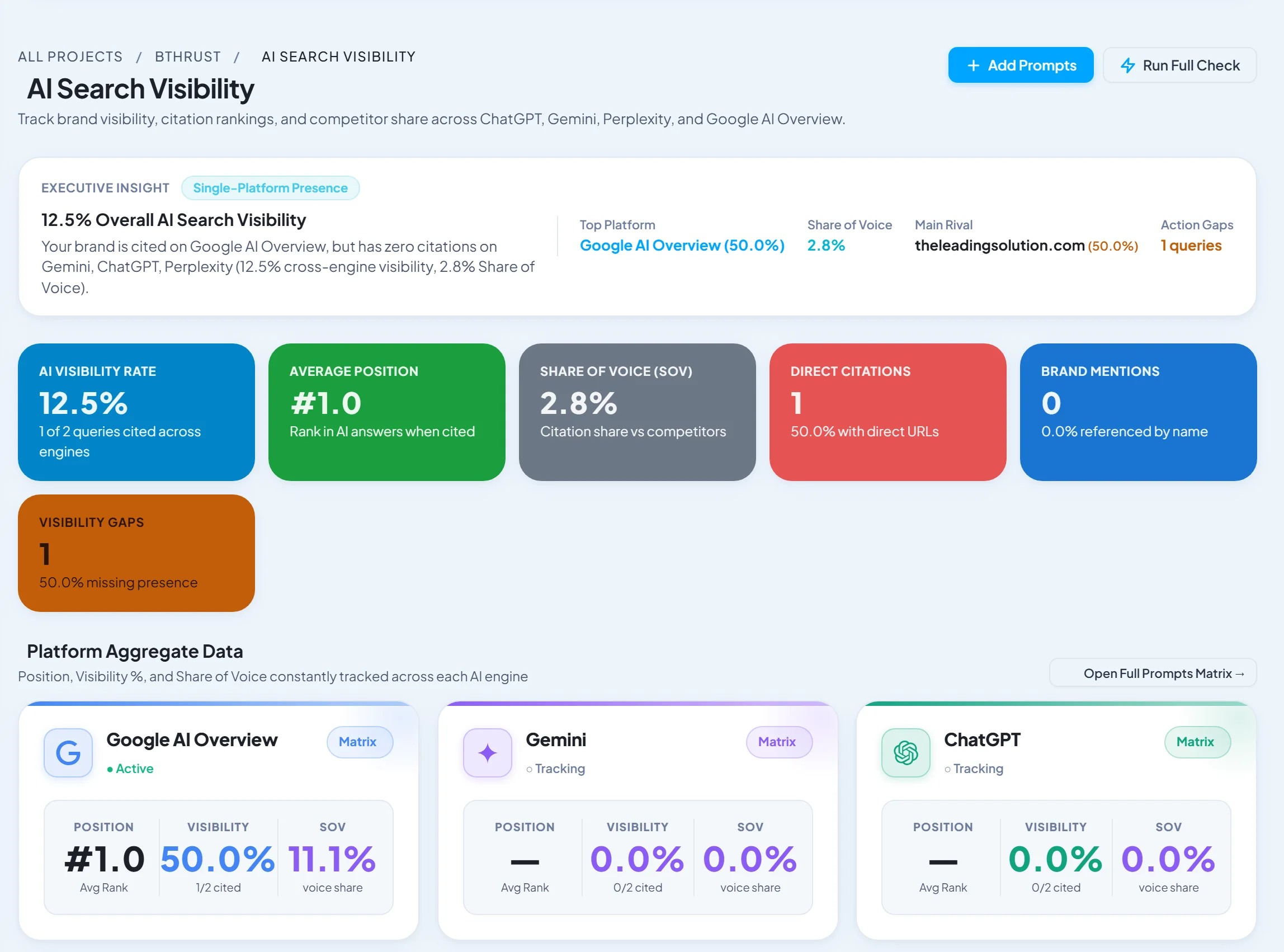


Fantastic actionable guidance. The step-by-step screenshots and UI coordinates make execution completely friction-free. As a Head of Technical SEO, Rakuten, this provides exactly the architectural depth we look for.