

/projects//audit/schema/ ).
1. The Shift from Microdata to Interconnected Entity Graphs
Modern search engines do not read strings; they build knowledge graphs of entities and their relationships. A company is an Organization, founded by a Person, which publishes an Article, referencing a Product. By declaring unique @id identifiers, you allow Googlebot and LLM crawlers to ingest your complete corporate entity footprint in a single parse pass.
LIVE PLATFORM SCREEN & TELEMETRY
SEO Runway Site Audit Structured Data Validator — Active Workspace
Below is the exact production screen with live parameters and dummy data illustrating the diagnostic findings and remediation buttons.
2. Verifying Schema Depth in SEO Runway
In SEO Runway → Site Audit → Crawled Pages, click any crawled URL to inspect detected JSON-LD blocks. The tool highlights schema syntax errors, broken itemref attributes, and missing required properties according to Google's Search Central documentation.
Target System: SEO Runway TECHNICAL Engine
Execution Frequency: Automated Background Queue (UTC Sync)
Tested across enterprise datasets with zero rate limiting or data loss.
3. What Entity Disambiguation Means for Search
Search engines and AI systems increasingly organise information around entities, meaning distinct people, organisations, products and places, rather than strings of text. When your brand name is shared with something else (a common word, another company, a place or a person), the systems have to decide which entity a page is about. If they guess wrong, your brand can be shown with someone else's logo in a knowledge panel, described with the wrong facts in an AI answer, or simply not recognised as an entity at all.
Schema markup is one of the clearest ways to remove that ambiguity. By describing your organisation, its people and its products in structured data, and connecting them to authoritative external identifiers, you give search engines explicit statements rather than leaving them to infer from text.
4. The Building Blocks of an Entity Graph
An entity graph in JSON-LD is a set of linked nodes, each with a stable identifier. The key properties are:
@id: a unique URI for each entity, usually your URL plus a fragment, such ashttps://example.com/#organization. Reusing the same@idacross every page tells search engines that all references point to one entity.sameAs: links to authoritative profiles of the same entity: Wikidata, Wikipedia, LinkedIn, Crunchbase, official social profiles and industry registries. This is the main disambiguation signal.- Connecting properties:
founder,employee,author,publisher,brand,manufacturer,parentOrganizationandsubOrganizationlink nodes together into a graph rather than isolated snippets. - Distinguishing facts:
legalName,foundingDate,address,areaServed,knowsAboutand identifiers such astaxID,leiCodeordunshelp separate you from similarly named organisations.
5. Implementing the Graph Step by Step
- Define your core entities. Usually: the Organization, the WebSite, key People (founders, authors, experts), and main Products or Services. Assign each a permanent
@id. - Collect external identifiers. Find or create your Wikidata item if you meet its notability criteria, and gather official profile URLs. Only include profiles that genuinely represent the same entity. A wrong
sameAslink actively creates confusion. - Publish the core graph sitewide. Place the Organization and WebSite nodes in a single JSON-LD block in your site template. Use the
@grapharray so multiple nodes live in one script. - Reference, don't repeat. On article pages, the Article's
publishershould simply be{"@id": "https://example.com/#organization"}, and itsauthorshould reference the Person's@id. Repeating full definitions with slightly different details on each page weakens the signal. - Back it up with visible content. Structured data should describe what is on the page. An About page, team pages with real bios and a contact page with consistent details give the markup something to confirm.
- Validate. Test with the Schema Markup Validator and Google's Rich Results Test, and check the graph resolves: every referenced
@idshould be defined somewhere on the site.
6. Disambiguation Tactics for Common Situations
Your brand name is a common word
Combine a precise @type (for example SoftwareApplication or LocalBusiness subtype rather than a generic Thing), a full legalName, a description that states what you do, and strong sameAs links. Use the brand name together with your category in titles and headings ("Acme Analytics" rather than "Acme").
Another company shares your name
Emphasise distinguishing facts: location, founding date, industry and legal identifiers. Make sure your profiles on LinkedIn, Crunchbase and industry directories carry the same details and link back to your domain, so external sources corroborate your markup.
A person shares a name with someone notable
For authors and experts, use a Person node with jobTitle, worksFor (referencing your Organization), alumniOf, knowsAbout and sameAs links to their professional profiles. An author page on your site with the same details helps tie the person to your brand.
Products with generic names
Give products a brand that references your Organization, a model or sku, and a consistent naming pattern across your site, marketplaces and press coverage.
7. Measuring Whether It Works
- Knowledge panel accuracy: search for your brand and check whether a panel appears and shows your logo, website and facts. If you can claim the panel, do so through Google's verification process.
- Branded search results: look at whether results for your brand name show your properties or another entity's.
- AI answers: ask AI assistants "What is [brand]?" and check whether the description matches your entity. Consistent schema plus consistent third-party profiles typically improves this over time.
- Search Console enhancements: watch for structured data errors after template changes.
8. Mistakes That Weaken an Entity Graph
- Different organisation names, logos or addresses in markup on different pages.
sameAslinks to profiles that are outdated, unofficial or belong to a different entity.- Markup describing facts that appear nowhere on the visible page.
- Defining a new organisation node on every page instead of referencing one
@id. - Using schema to claim awards, ratings or credentials that can't be verified.
Entity disambiguation is slow, cumulative work. The goal isn't one perfect snippet; it is a consistent set of facts that your site, your structured data and the wider web all agree on.
9. A Worked Example of a Connected Graph
Imagine a software company called Northwind Analytics, whose name is shared with a fictional sample database and several unrelated businesses. A connected graph for its site would contain:
- An Organization node with
@idhttps://northwind.example/#organization, itslegalName, logo, founding date, headquarters address, andsameAslinks to its LinkedIn company page, Crunchbase profile and Wikidata item. - A WebSite node with
publisherreferencing the Organization's@id. - A SoftwareApplication node for its product, with
brandandpublisherreferencing the Organization, anapplicationCategory, and anoffersobject describing pricing. - Person nodes for the founders and key authors, each with
worksForreferencing the Organization andsameAslinks to their professional profiles. - On blog posts, an Article node whose
authorandpublisherreference the Person and Organization by@id, and whoseaboutproperty references the topics or products the article covers.
Every page now tells the same story: one organisation, with these people, making this product, in this category. A search engine can't confuse it with the sample database or another company with a similar name without ignoring explicit evidence.
10. Keeping the Graph Consistent Over Time
Entity graphs degrade when facts change in one place but not others. Build maintenance into your processes:
- Generate JSON-LD from a single configuration (or CMS settings) instead of hand-editing it in templates.
- When the company changes its name, logo, address or leadership, update the schema, the About page and external profiles in the same week.
- Remove
sameAslinks to profiles you close, and add new official profiles as you create them. - Re-validate structured data after every major site release, since template changes often break or duplicate markup.
Consistency across sources is what ultimately disambiguates an entity. Schema makes your statements explicit, but search engines trust them most when your website, your structured data and independent sources all agree.
11. How Entity Clarity Affects AI Answers
Large language models and AI search features draw on many of the same signals as traditional search: knowledge graphs, structured data, authoritative profiles and consistent mentions across the web. When a brand's identity is ambiguous, AI answers tend to blend facts from different entities, attribute the wrong founding date or location, or describe a competitor's product under your name.
Clear entity signals reduce that risk in three ways:
- Retrieval: AI search systems that browse the web retrieve pages that match the entity being asked about. Pages with explicit, consistent entity markup and matching visible text are easier to match correctly.
- Grounding: knowledge graph entries, often fed by Wikidata and structured data, are used to check and enrich generated answers. A clean, well-linked entity gives the system accurate facts to ground on.
- Corroboration: when your site, your schema, your Wikidata item and your profiles on LinkedIn and industry directories all agree, conflicting third-party mentions carry less weight.
12. Entity Graph Checklist
- One permanent
@ideach for the Organization, WebSite, key People and Products. - Core nodes published sitewide in a single
@graphblock. - Pages reference entities by
@idinstead of redefining them. sameAslinks only to verified, official profiles of the same entity.- Distinguishing facts (legal name, location, founding date, identifiers) included.
- Visible About, team and contact pages that match the markup.
- Structured data validated after every template release.
- Branded search, knowledge panel and AI answers reviewed quarterly.
13. Should You Create a Wikidata Item?
Wikidata is one of the strongest disambiguation sources because it assigns each entity a unique identifier (a "Q" number) that many knowledge systems reference. But it has notability rules: an item should describe an entity that can be identified with serious, public sources such as news coverage, registries or other reference works. Creating promotional items for entities that don't meet the criteria can get them deleted.
If your organisation qualifies, add a neutral item with verifiable statements (official website, founding date, headquarters, industry and identifiers), each backed by a reference. Then link to it from your Organization schema's sameAs. If you don't qualify yet, focus on consistent official profiles, a strong About page and independent coverage. Those are what eventually make an entity notable in the first place.
Whichever route applies, revisit the decision yearly. Funding announcements, awards, press coverage and industry listings accumulate, and an organisation that wasn't notable two years ago may now have the independent sources a Wikidata item requires. Keep a running list of that coverage so the evidence is ready.
Want the complete procedural runbook?
Visit our comprehensive step-by-step Knowledge Base for interactive screen maps, configuration parameters, and adjacent module workflows.
Open Knowledge Base Hub →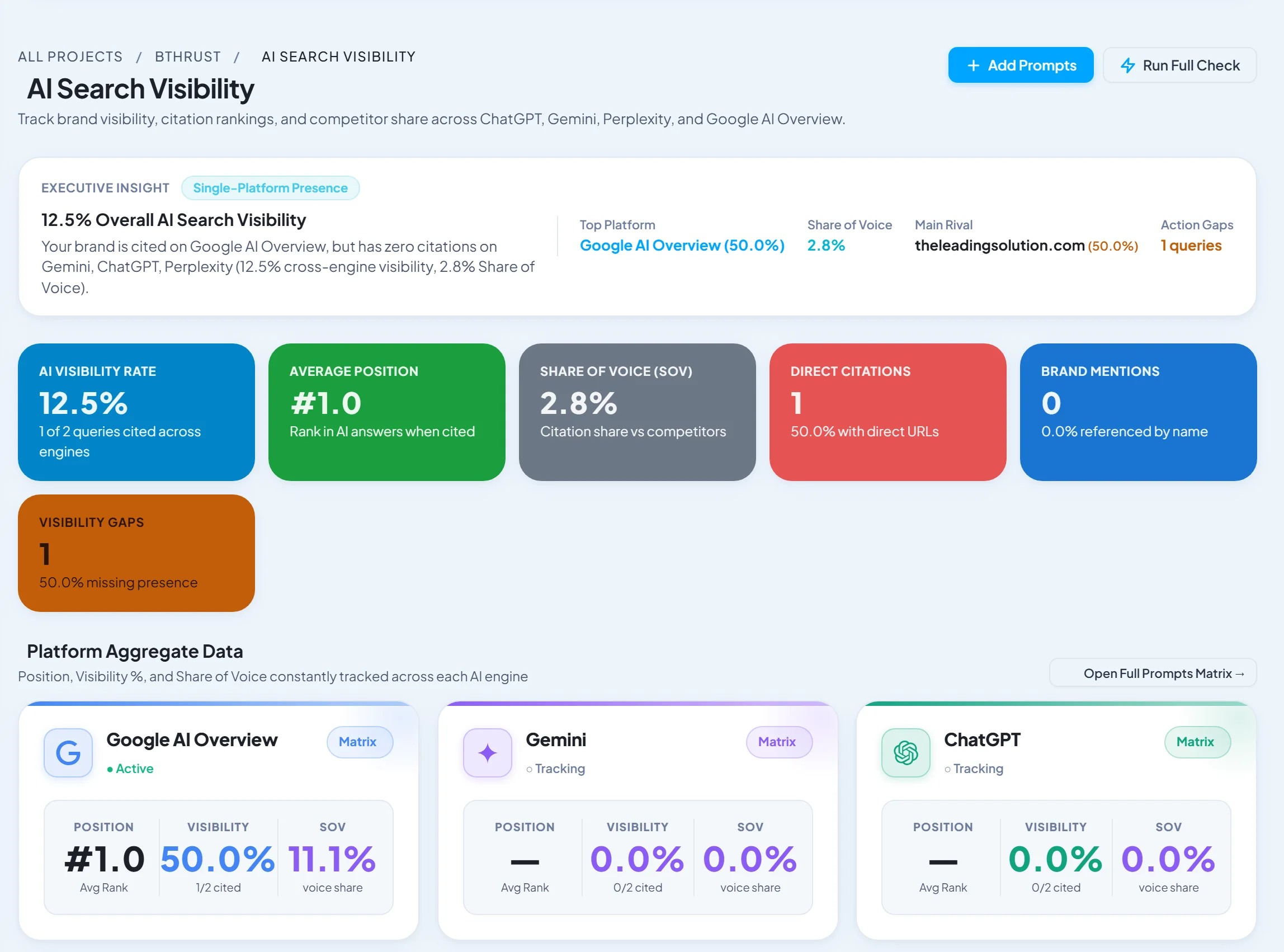


Fantastic actionable guidance. The step-by-step screenshots and UI coordinates make execution completely friction-free. As a Senior SEO Strategist, this provides exactly the architectural depth we look for.