

/projects//ai_search/citations/ ).
1. The Forum Content Boom in AI Search
Recognizing that corporate landing pages are saturated with marketing buzzwords, conversational search algorithms increasingly look to community discussions to answer queries like 'What is the most reliable uptime monitor for agencies?'. An authentic mention in an authoritative subreddit carries immense algorithmic credibility.
LIVE PLATFORM SCREEN & TELEMETRY
SEO Runway AI Search Citation Mining & Brand Mentions — Active Workspace
Below is the exact production screen with live parameters and dummy data illustrating the diagnostic findings and remediation buttons.
2. Uncovering Forum Citations in SEO Runway
Navigate to SEO Runway → AI Search → Citations & Sources. Filter by source domain: reddit.com or quora.com. Inspect which threads are cited for your tracked prompts and participate genuinely in ongoing discussions.
Target System: SEO Runway GEO Engine
Execution Frequency: Automated Background Queue (UTC Sync)
Tested across enterprise datasets with zero rate limiting or data loss.
3. Why Communities Shape AI Recommendations
When people ask AI assistants for recommendations ("What's the best budget mechanical keyboard?", "Which accounting software do freelancers actually like?"), the answers frequently reflect what real users say in communities: Reddit threads, specialist forums, Q&A sites, product communities and review discussions. Search engines have increasingly surfaced these discussions too, and AI search tools often cite them directly because they contain first-hand experiences and comparisons that brand websites don't.
For brands, this means community knowledge is now one of the inputs that shape how you're described and whether you're recommended. A product consistently praised in genuine discussions is more likely to appear in AI answers. One that is absent, or criticised without response, is at a disadvantage no matter how good its website is.
4. Finding the Communities That Matter
- Check which communities AI cites. Run your category and comparison prompts in Perplexity, ChatGPT search and Google AI Overviews, and note every forum or community URL cited.
- Search the communities directly for your brand, competitors and category terms to see where discussions happen.
- Identify the active spaces: specific subreddits, niche forums, Slack or Discord communities, Stack Exchange sites, LinkedIn and Facebook groups, and industry Q&A platforms.
- Assess sentiment and themes: what do people praise and criticise about you and competitors, and what questions go unanswered?
- Note the rules of each community, especially on self-promotion and disclosure. Many prohibit promotional posts entirely.
5. Participating the Right Way
Community participation works only when it is genuine. Approaches that build lasting presence:
- Disclose your affiliation every time you mention your own product. Undisclosed promotion breaks community rules and, when discovered, damages trust badly.
- Answer questions helpfully, including ones where your product isn't the answer. Being known as a useful expert builds more credibility than any pitch.
- Respond to criticism constructively: acknowledge problems, explain fixes and offer to help publicly, rather than arguing.
- Share specific expertise, such as detailed how-to answers, data and troubleshooting steps, that people will reference later.
- Let customers speak for you. Encourage satisfied customers to share their experiences where relevant, without scripting or incentivising posts.
- Host your own community if your product has an engaged user base: a forum, user group or knowledge base where customers help each other. Public, crawlable community content can itself be cited by AI systems.
6. What to Avoid
- Creating fake accounts to praise your product or criticise competitors.
- Paying for undisclosed posts or upvotes.
- Copy-pasting promotional replies across many threads.
- Arguing with critics or asking moderators to remove legitimate criticism.
- Dropping links into old threads without adding value.
Communities and platforms actively detect and remove manipulation, and AI providers have strong incentives to discount it. Inauthentic activity is risky and tends to backfire.
7. Turning Community Insight into Content
Community discussions are also a rich source of content ideas. The questions people ask repeatedly, the comparisons they debate and the problems they struggle with are exactly what your content should answer. Collect recurring questions monthly, then:
- Create clear guides and FAQ entries that answer them on your site.
- Publish honest comparison pages for the debates you see most often.
- Add troubleshooting articles for common problems, with steps and screenshots.
- Update documentation where confusion repeats.
When you later answer a community question, you can link to the relevant guide as a genuinely useful resource, with disclosure, rather than as promotion.
8. Measuring Community Impact
- Share of voice in communities: how often you are mentioned compared with competitors in the communities that matter.
- Sentiment of mentions over time.
- Unanswered questions about your product that you resolved.
- AI visibility: mention rate and attributes on category prompts, to see whether community presence is reflected in answers.
- Referral traffic from community sites, and leads that mention them.
9. A Worked Example
A project management tool notices that Perplexity frequently cites two Reddit threads and one specialist forum when users ask about tools for small creative agencies, and that its brand appears in neither. Reading the threads shows people asking about client approval workflows and per-seat pricing, and recommending two competitors. The company responds in three ways. A product specialist joins the forum, discloses their role, and answers questions about approval workflows in detail, including when a competitor might be the better fit. The company publishes a guide on client approval workflows for creative agencies with screenshots. And it asks a few long-standing agency customers whether they would be willing to share their honest experiences in relevant discussions, with no scripts and no incentives.
Over the following months, new discussions begin mentioning the product alongside competitors, and the company's AI visibility tracking shows it appearing in more answers for agency-specific prompts. No single post caused the change. Consistent, genuine participation shifted the conversation that AI systems draw on.
10. Community Strategy Checklist
- Communities cited in AI answers for your category identified.
- Brand, competitor and category discussions monitored monthly.
- Community rules on promotion and disclosure understood.
- Staff participation always disclosed and genuinely helpful.
- Criticism answered constructively and publicly.
- Customers encouraged to share honest experiences, without incentives.
- Recurring questions turned into guides, FAQs and comparisons.
- Community share of voice, sentiment and AI visibility tracked.
11. Building Your Own Community Knowledge Base
Brands with active users can create community knowledge that AI systems draw on directly. A public, crawlable support forum or community site, where customers ask questions and other customers and staff answer them, produces exactly the kind of first-hand, problem-specific content answer engines cite. To make it useful:
- Keep it public and indexable for general questions, while protecting account-specific support in private channels.
- Use clear thread titles that state the question, and mark accepted answers so the best solution is easy to identify.
- Have staff confirm and update answers when product changes make old solutions outdated.
- Turn popular threads into official help articles, linking back to the discussion.
- Moderate for quality, removing spam and merging duplicate threads.
A healthy community also reduces support costs, improves retention and generates product feedback, so it pays for itself well beyond its effect on AI visibility.
12. Timeframes and Expectations
Community influence builds slowly. Search-enabled AI answers can reflect new, highly visible discussions within weeks, but changing how your brand is generally described across many answers usually takes months of consistent participation and accumulating customer voices. Treat it like relationship-building rather than a campaign: assign people who know the product deeply, give them time each week, and judge the results quarterly.
13. Review Platforms as Communities
Review platforms behave like communities in AI answers: they hold many first-hand experiences in one place, and answer engines cite them heavily for "which is best" questions. Treat them as part of the same strategy:
- Find the platforms cited for your category, such as G2 and Capterra for software, Trustpilot for consumer services, TripAdvisor for hospitality, or industry-specific review sites.
- Complete your profiles with current product descriptions, pricing, categories and screenshots.
- Ask every satisfied customer for an honest review at the right moment, such as after onboarding, a successful project or a renewal, without offering incentives where the platform prohibits them.
- Respond to reviews, especially critical ones, with specific, helpful replies.
- Encourage detail: reviews that mention use cases, team size and specific features help AI answers match you to the right buyers.
14. Coordinating Teams
Community presence touches marketing, product, support and customer success. Agree who monitors which communities, who may post on the company's behalf, how affiliation is disclosed, and how product issues raised in communities are passed to the right team and answered. A shared monthly summary of themes, questions, sentiment and actions keeps everyone aligned. It also turns community listening into a regular source of product and content improvements, not just a channel for visibility.
15. Common Mistakes
- Treating communities as ad channels instead of places to help.
- Ignoring negative threads that AI keeps citing, rather than responding constructively.
- Posting only when you have something to promote, so your account looks purely commercial.
- Measuring only clicks from communities and missing their influence on AI answers and brand perception.
- Letting one person own everything, so participation stops when they are busy or leave.
- Keeping your own community private when public, indexable threads could help others and be cited.
Community knowledge has become one of the most trusted inputs for AI recommendations because it reflects real experience. Brands that earn a genuine place in those conversations, by helping, listening, fixing problems and letting satisfied customers speak, build a kind of visibility that is hard for competitors to copy and that lasts longer than any campaign.
16. A Weekly Routine That Fits Busy Teams
- Monday (15 minutes): check alerts and saved searches for new mentions of your brand, competitors and category terms in your priority communities.
- Midweek (30–45 minutes): answer two or three questions where you can genuinely help, disclosing your affiliation, and respond to any criticism needing a reply.
- Friday (15 minutes): log recurring questions, product issues and content ideas in a shared document, and pass bugs or feature requests to the product team.
About an hour a week, done consistently by someone who knows the product, builds more lasting presence than an occasional burst of activity, and it keeps your brand in the conversations AI assistants learn from.
Start with the single community that AI cites most often for your category. Learn its rules, read its most popular threads about your space, and contribute genuinely for a month before judging the results.
Want the complete procedural runbook?
Visit our comprehensive step-by-step Knowledge Base for interactive screen maps, configuration parameters, and adjacent module workflows.
Open Knowledge Base Hub →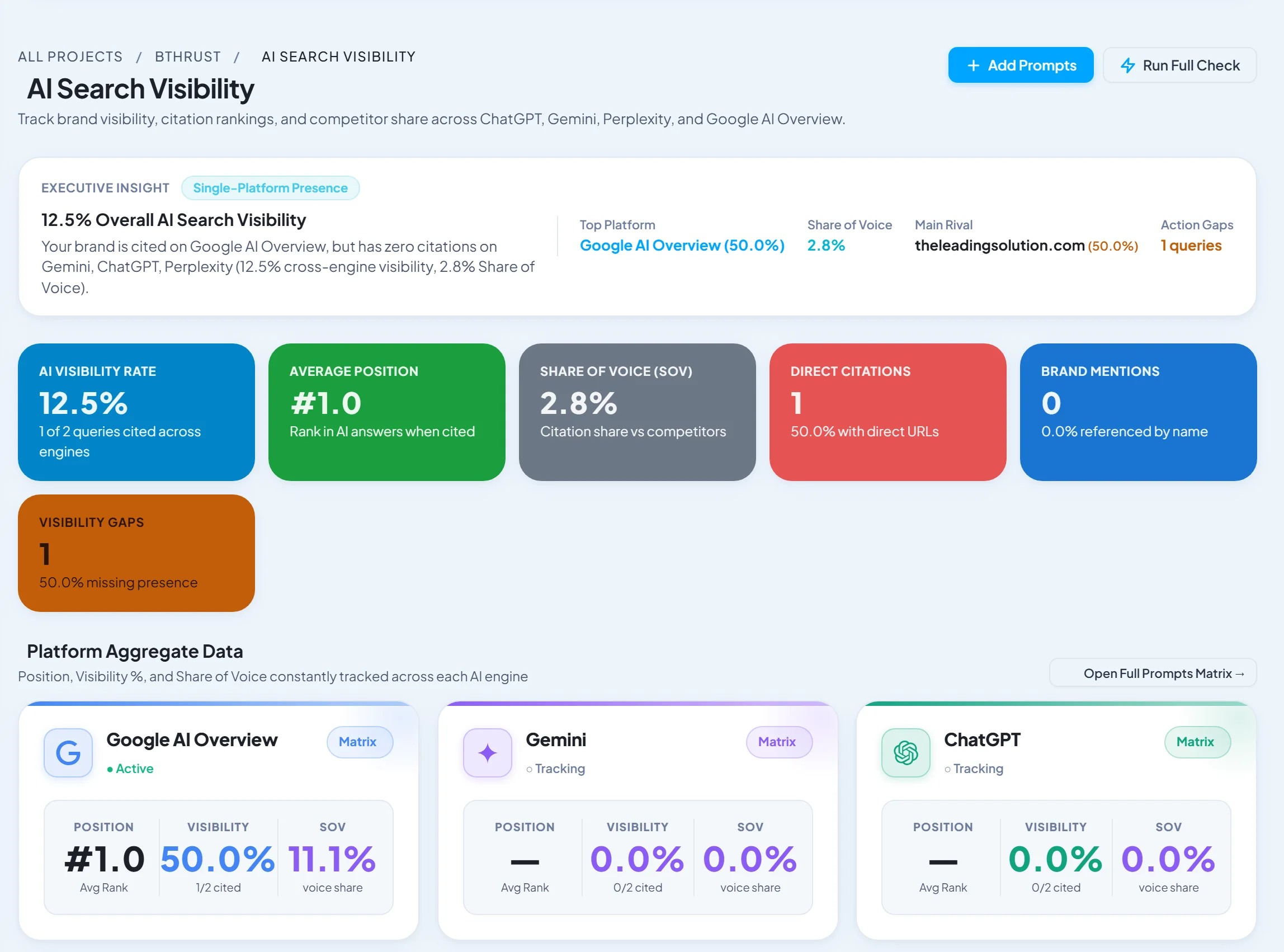


Incredible breakdown. We implemented this exact workflow last week and already saw a noticeable shift in our telemetry. As a VP Marketing, CloudScale, this provides exactly the architectural depth we look for.