

/projects//audit/internal-links/ ).
1. Mathematical Principles of Internal Link Equity
Every backlink your domain earns pours authority into your homepage and primary landing pages. Internal PageRank calculates how that authority diffuses through your internal link graph. Pages with high in-link counts, low depth (click distance from homepage), and contextual descriptive anchors inherit the greatest ranking power.
LIVE PLATFORM SCREEN & TELEMETRY
SEO Runway Site Audit Internal Link Equity Graph — Active Workspace
Below is the exact production screen with live parameters and dummy data illustrating the diagnostic findings and remediation buttons.
2. Auditing Internal Link Depth in SEO Runway
In SEO Runway → Site Audit → Crawled Pages, sort pages by Crawl Depth. Commercial category pages should never exceed Depth 3. Identify orphaned pages with 0 internal links and build contextual links from related high-performing articles.
Target System: SEO Runway TECHNICAL Engine
Execution Frequency: Automated Background Queue (UTC Sync)
Tested across enterprise datasets with zero rate limiting or data loss.
3. Internal PageRank in Plain Terms
PageRank was Google's original method for estimating a page's importance from the links pointing to it. The idea still underpins how link value flows through a site: every page passes some of its authority to the pages it links to, divided among its outgoing links. Pages that receive many links from important pages become important themselves. Google's modern systems are far more complex, but the principle that internal links distribute importance remains one of the most controllable levers in SEO.
"Graph centrality" is the general mathematical idea behind this. Treat your site as a graph where pages are nodes and internal links are edges. Centrality metrics, such as PageRank, in-degree (number of incoming links) and closeness (how few clicks a page is from everything else), quantify which pages the structure treats as important. The goal of internal link optimisation is simple: make sure the pages that matter most to the business are also the most central in the graph.
4. Measuring Internal Link Equity
- Crawl the site with a crawler that records every internal link, including source, target, anchor text and whether the link sits in navigation, footer or main content.
- Calculate internal PageRank. Several crawlers report an internal link score. Alternatively, export the link list and compute PageRank with a graph library such as NetworkX in Python. A few lines of code give you a score for every URL.
- Add business value. Join the scores to revenue, conversions or organic clicks by URL.
- Find mismatches. Plot centrality against business value. The interesting pages are in two corners: high-value pages with low centrality (under-linked money pages) and low-value pages with high centrality (utility pages hoarding link equity).
- Check click depth. Pages more than three or four clicks from the homepage tend to be crawled less often and receive less internal authority.
5. Common Causes of Misallocated Equity
- Sitewide links to utility pages. Login, cart, terms, privacy and contact pages linked from every page's header and footer collect large amounts of internal PageRank they don't need for ranking.
- Mega-menus with hundreds of links that flatten the hierarchy, giving every category the same weight and diluting the value passed to each.
- Orphaned or near-orphaned pages: products or articles reachable only through sitemaps, internal search or deep pagination.
- Tag and archive pages generated automatically, each linked widely, absorbing equity without ranking for anything.
- Old content that once ranked, still heavily linked from popular articles, while newer replacement pages receive no links.
- Links through redirects, which waste crawl effort and add an unnecessary hop before value reaches the destination.
6. Optimisation Tactics
Strengthen contextual links to priority pages
Links inside the main content of relevant, well-linked pages are among the strongest internal signals. Identify your highest-centrality articles and categories, and add descriptive links from them to under-linked priority pages on the same topic.
Build hub pages
Topic hub or pillar pages that link to every important page in a cluster, and receive links back from each, concentrate authority on the theme and make the structure easy for crawlers to understand.
Trim sitewide link sprawl
Reduce footer and navigation links to what users genuinely need. You don't have to remove legal pages from the footer, but you can avoid repeating long link lists that add little navigational value.
Reduce click depth
Use breadcrumbs, category hubs, "related" modules and sensible pagination so every important page sits within three clicks of the homepage.
Point links at final URLs
Update internal links that pass through redirects, and remove links to pages that are noindexed or canonicalised elsewhere.
Use descriptive anchor text
Anchor text helps search engines understand the target page's topic. "Compare rank tracking tools" says far more than "click here". Vary anchors naturally rather than repeating one exact phrase everywhere.
7. A Practical Python Workflow
For teams comfortable with a little code, a repeatable analysis takes about an hour to set up:
- Export the crawler's "all inlinks" report as a CSV of source and destination URLs, filtered to indexable 200 pages.
- Load it into a directed graph with NetworkX and run its PageRank function. Optionally weight content links higher than navigation links.
- Merge the scores with Search Console clicks and analytics revenue per URL.
- Rank pages by the gap between business value rank and centrality rank.
- Pick the top 20 under-linked pages and find relevant, high-centrality pages to link from.
- Re-crawl after changes and compare the scores.
8. Measuring Results
Internal linking changes usually show up first in crawl data (priority pages crawled more often, at lower depth), then in rankings and impressions for the pages that gained links. Track a test group of pages that received new internal links against a similar control group that didn't, over six to eight weeks. That comparison separates the effect of your linking work from seasonality and algorithm updates, and it gives you evidence for scaling the approach.
9. Mistakes to Avoid
- Adding hundreds of exact-match keyword links in footers or sidebars, which looks manipulative and adds little value.
- Using nofollow on internal links to "sculpt" PageRank. Google treats nofollowed links as not passing value, but the value isn't redistributed to the remaining links, so you simply waste it.
- Linking only from new content to old, never updating older popular pages to link to newer ones.
- Ignoring user value. Internal links should help readers find genuinely related information; links that only serve SEO tend to be ignored by users and weighed lightly by search engines.
10. Internal Linking Checklist
- Internal PageRank or link scores calculated for every indexable URL.
- Scores compared with revenue and organic value to find mismatches.
- Priority pages within three clicks of the homepage.
- Contextual links from high-centrality pages to under-linked priority pages.
- Hub pages for each major topic cluster.
- Navigation and footer links limited to what users need.
- No internal links through redirects or to non-indexable pages.
- Results measured with test and control groups.
11. Navigation Design and Link Equity
Navigation is the largest source of internal links on most sites, because it repeats on every page. A few design choices determine whether it concentrates or dilutes authority:
- Prioritise categories by value. Top navigation should link to the categories that drive the most revenue and search demand, not to every category in the catalogue.
- Keep menus crawlable but focused. Mega-menus are fine when they reflect a genuine hierarchy. A menu with 400 links passes very little value to each one and makes the structure harder to interpret.
- Use breadcrumbs. Breadcrumbs link every page to its parents, reinforcing the hierarchy and giving category pages a steady flow of internal links from products and articles beneath them.
- Make the footer useful, not exhaustive. A footer with key pages and legal links serves users; one with hundreds of keyword-stuffed city or product links is a dated tactic.
- Render navigation in HTML. Menus built only with JavaScript click handlers may not be followed as links.
12. Internal Linking at Scale with Automation
Manual linking works for dozens of pages, not tens of thousands. Large sites can add structured, rule-based internal links:
- Related-content modules that link each article or product to others on the same topic, chosen by category, tags or semantic similarity.
- Category descriptions with links to the top subcategories and best-selling products.
- "Popular in this category" blocks driven by sales or traffic data, so high-value pages automatically receive more links.
- Glossary or entity linking, where the first mention of a defined term in an article links to its explanatory page.
Automated links should be capped (a handful per module), relevant and varied in anchor text. Review samples regularly to make sure the rules aren't producing irrelevant connections.
13. Prioritising Pages for Link Investment
When you can't fix everything at once, focus internal link effort where it is most likely to change rankings: pages ranking in positions 5–20 for valuable keywords, new pages targeting commercial queries, and pages whose traffic has been declining despite good content. These pages are close to their potential, and a stronger position in the internal graph is often enough to move them. Pages with no search demand or very weak content are better improved or consolidated before you send them more internal authority.
14. Auditing Anchor Text Across the Site
Alongside link counts, review what your internal anchors say. Export every internal link to a priority page together with its anchor text, then look for three problems. First, generic anchors ("read more", "learn more", "here") that tell search engines nothing about the target. Second, inconsistent anchors that describe the page as different topics, which can blur what it should rank for. Third, the same anchor used for two different pages, a quiet source of internal keyword cannibalisation. Fixing anchors is low-risk and often quick: rewriting a "read more" link as "see our guide to technical SEO audits" improves both usability and relevance signals at once.
Make anchor review part of your content publishing checklist. Every new article should link to at least two or three relevant priority pages with descriptive anchors, and receive links from two or three existing related pages within a week of publishing. That small habit keeps new pages connected to the graph from day one, instead of leaving them orphaned until the next audit. Over a year, it adds hundreds of relevant contextual links that no automated module would have created.
Finally, re-run the centrality analysis each quarter. Sites change constantly, and the pages your graph favours drift away from the pages your business needs unless someone checks and corrects the balance deliberately. A quarterly review keeps internal authority flowing to the pages that earn revenue today.
Want the complete procedural runbook?
Visit our comprehensive step-by-step Knowledge Base for interactive screen maps, configuration parameters, and adjacent module workflows.
Open Knowledge Base Hub →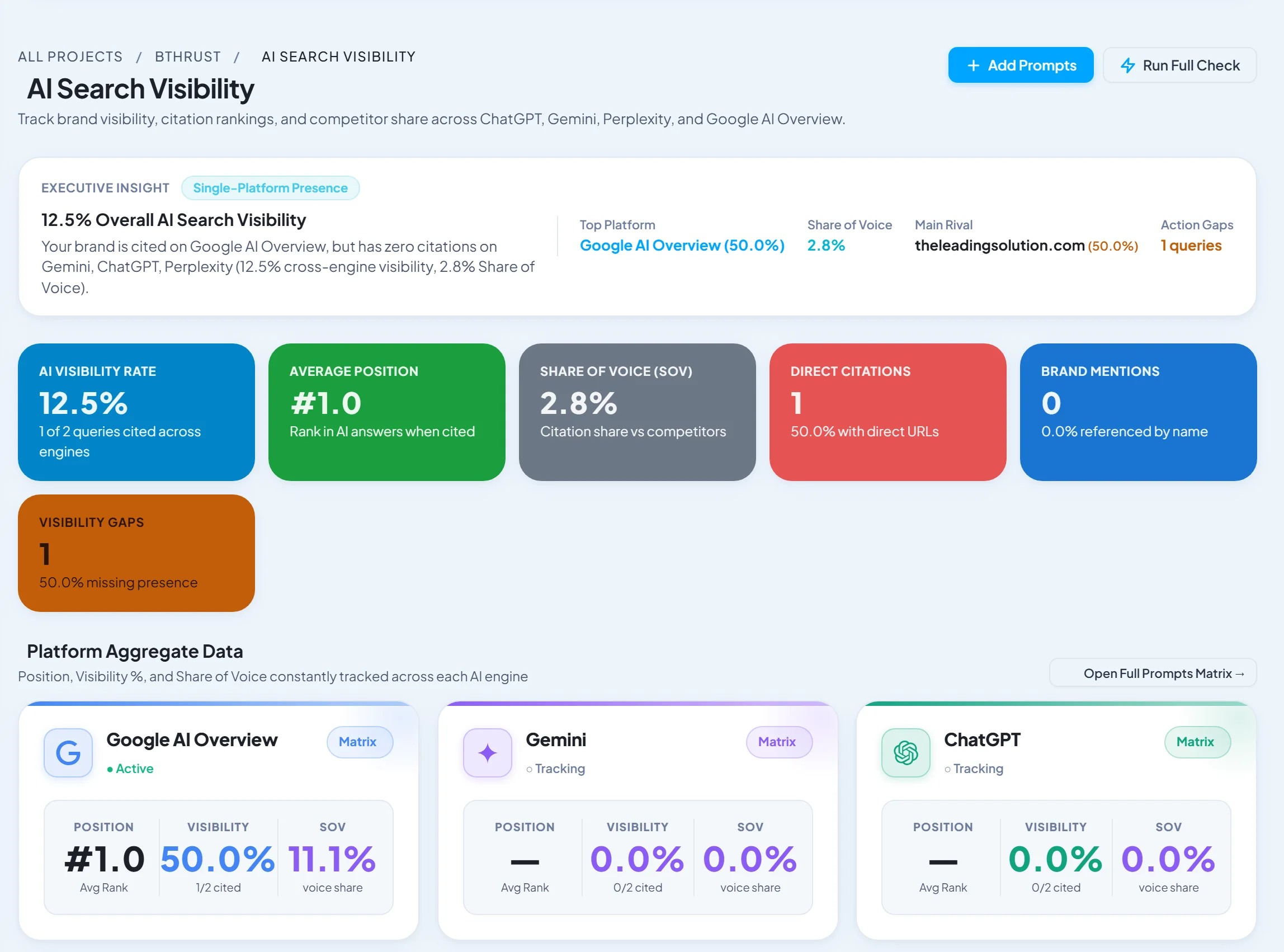


Fantastic actionable guidance. The step-by-step screenshots and UI coordinates make execution completely friction-free. As a VP Marketing, CloudScale, this provides exactly the architectural depth we look for.